
3 Ways People Try to Push a Security Guard’s Boundaries

Most people do not test a security guard by forcing a door.
They start with a small request.
They ask the guard to hold a door. They claim they are late. They mention an important name. They may also become angry when the guard asks questions.
Some people are testing security on purpose. Others are simply impatient or entitled.
The risk is still the same.
The guard is being pushed to make an exception.
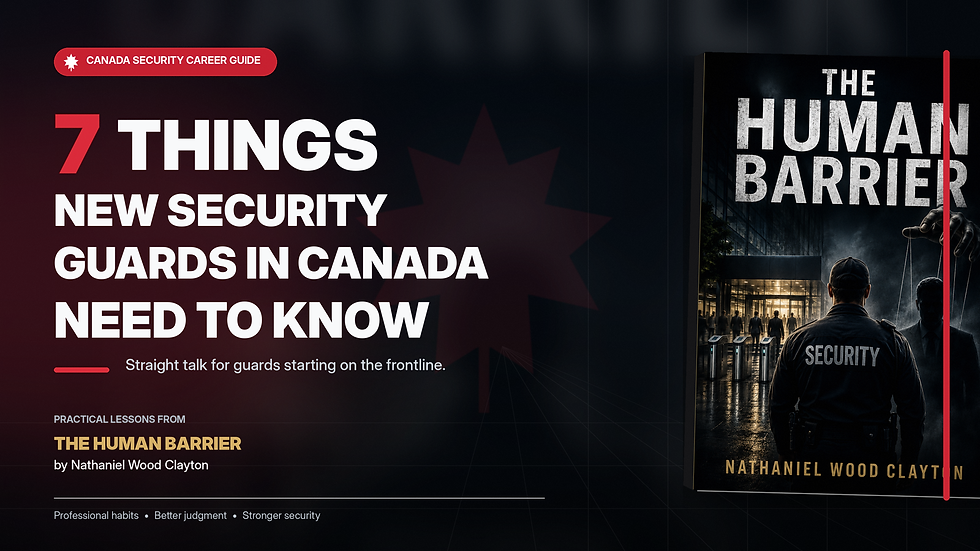
In my book, The Human Barrier, I write:
“Every exception is an opening. The attacker’s job is to make the exception feel reasonable.”
That is how boundary pushing works. The request is made to sound harmless. The guard is made to feel unreasonable for saying no.
Here are three common ways it happens.
1. They Create Urgency

Urgency is one of the oldest pressure tactics.
The person may say:
“I am already late.”
“The manager is waiting for me.”
“The system is going down.”
“This is an emergency.”
The goal is simple.
They want the guard to act before checking the facts.
Urgency can also make the guard feel responsible for the delay. The person may suggest that money will be lost. They may say someone will get in trouble. They may blame the guard for making the situation worse.
That pressure can be effective during a busy shift. It is even stronger when the guard is alone, tired, or dealing with several tasks.
A real emergency may require a fast response. It does not require blind access.
Speed up the verification process. Do not remove it.
A calm response works best:
“I understand. I still need to verify before access.”
Do not argue about the story. Verify it.
Use the approved directory. Contact the supervisor. Confirm the appointment, work order, host, or emergency request.
The more someone pushes you to hurry, the more important it is to stay in control.
2. They Use Status, Anger, or Intimidation

Some people push boundaries by acting important.
They may wear a uniform. They may carry a clipboard. They may use technical language. They may claim to be an executive, inspector, contractor, government employee, or emergency worker.
Then the pressure begins.
“Do you know who I am?”
“I will have your job for this.”
“Call your supervisor if you want to get in trouble.”
These statements target the guard’s fear of conflict.
No guard wants to receive a complaint. No one wants to be accused of delaying an important person. That fear can make an exception feel safer than following procedure.
It is not safer.
As I explain in The Human Barrier:
“A uniform is a clue, not proof.”
A title is also not proof. Neither is a badge shown from a distance.
Stay respectful. Keep your answer short.
“You are welcome to speak with my supervisor. I still cannot bypass procedure.”
Do not try to win the argument. Do not match their anger.
Bring another decision-maker into the situation. Verify the person through an independent source.
A professional guard does not surrender to status. The same process applies to everyone.
3. They Use Friendliness, Sympathy, or Familiarity

Not every boundary test feels threatening.
Some feel friendly.
The person may bring coffee. They may remember your name. They may tell jokes. They may act like a regular visitor.
Then comes the favor.
“I forgot my badge again.”
“You know me.”
“The other guard always lets me in.”
“Can you hold the door? My hands are full.”
Other people use sympathy. They may appear upset or distressed. Their situation may even be genuine.
A guard can show compassion without surrendering access control.
In The Human Barrier, I make this point clear:
“Familiarity is not authorization.”
I also write:
“A person who knows your name still does not own the door.”
Help the person through the correct process.
Direct them to the desk. Verify their identity. Contact their host. Require each person to use their own badge.
Being helpful does not mean opening a controlled door.
Stay Steady
The strongest security guard is not the loudest person at the entrance.
The strongest guard is steady.
They listen. They stay calm. They verify. They document what happened. They call for support when needed.
One sentence can help during almost any boundary test:
“I understand. I still have to verify before I can allow access.”
It is respectful.
It is clear.
It also keeps the conversation focused on procedure.
Protect the door. Protect the people. Protect the information.
Do not let pressure make the decision for you.

Comments