top of page

What Security Guards Should Never Reveal at the Front Desk

Writer: Nathaniel Clayton
Nathaniel Clayton
Jun 22
5 min read
Professional security guard at a front desk protecting sensitive information from an unauthorized visitor. Security awareness image illustrating social engineering prevention, access control, employee privacy, operational security, visitor verification, and frontline security guard training. Inspired by The Human Barrier by Nathaniel Wood Clayton.

A security breach does not always begin with a forced door. Sometimes, it begins with a polite question.

“What time does the night shift start?”

“Which entrance do contractors use?”

“Is that camera working?”

“Who approves visitors after hours?”

Most people who ask these questions will have a legitimate reason. That does not mean the answer should be automatic.

A frontline security guard’s job is not to accuse people. It is to recognize when an ordinary question touches operational information—and verify the request before answering.

This is known as information elicitation. It is a quiet form of social engineering and physical security reconnaissance.


The Security Desk Holds More Than Keys

Frontline security guard protecting confidential operational information at a corporate security desk. Image highlights social engineering awareness, information elicitation threats, access control procedures, patrol schedules, employee privacy, visitor management, incident reporting, and physical security best practices for security professionals.

Security guards often know the site better than most employees.

They know which doors have problems, when deliveries arrive, who carries master keys, which manager answers after-hours calls, and which camera is waiting for repair.

That knowledge is operational information. In the wrong hands, it can help someone identify weaknesses, predict routines, or build a convincing reason for access.

“A professional adversary views a secure facility as an information puzzle.”— Nathaniel Wood Clayton, The Human Barrier

One answer may seem harmless. Several answers, collected over time, can reveal a pattern.


Five Details Security Guards Should Not Confirm

Frontline security professional preventing information disclosure at a security desk. Image represents social engineering awareness, information security, physical security, access control management, security guard training, visitor screening, operational security, employee privacy protection, and best practices for defending against reconnaissance and security breaches.

1. Staffing and shift changes

Frontline security officers conducting a shift change briefing at a security desk. Image represents security guard training, staffing management, shift handover procedures, operational security, physical security operations, incident documentation, patrol planning, confidential information protection, and social engineering prevention.

Do not disclose when guards arrive, leave, rotate, or take breaks.

Avoid confirming who is currently working, when a supervisor will return, or whether the site is operating with fewer guards than usual.

Staffing information can reveal when security coverage is weakest.


2. Patrol routes and timing

Security guard monitoring patrol routes and patrol timing from a security operations center while reviewing patrol logs, facility maps, and security checkpoints. Physical security awareness image illustrating patrol route management, patrol schedule security, operational security (OPSEC), security guard training, access control protection, perimeter security, facility surveillance, incident prevention, and security operations planning. Highlights the importance of protecting patrol patterns, reducing predictability, preventing reconnaissance, and strengthening frontline security through effective patrol management.

Do not tell anyone when a parking lot, loading dock, hallway, or floor will be checked.

Even an approximate patrol schedule can create a predictable window when an area may be unattended.

Patrol information should remain within the security team and approved management channels.


3. Camera, alarm, and door problems

Security guard monitoring and reporting camera failures, alarm system faults, and access control door issues from a security operations center. Physical security awareness image illustrating surveillance system monitoring, alarm response procedures, access control security, security incident reporting, operational security (OPSEC), facility protection, security guard training, and risk management. Highlights the importance of identifying, documenting, and reporting security equipment problems to maintain effective site security and reduce vulnerabilities.

Never discuss camera blind spots, faulty card readers, broken locks, delayed alarms, or equipment awaiting repair.

A person may casually ask whether a camera works or whether a door “always gives people trouble.” The question may be innocent, but the answer still exposes a weakness.

Report security equipment problems internally. Do not explain them publicly.


4. Access-control procedures

Professional security guard enforcing access control procedures at a secure entry point while verifying visitor credentials and authorization. Physical security awareness image illustrating visitor screening, identity verification, access management, security guard training, authorized access control, tailgating prevention, visitor management, security checkpoints, operational security (OPSEC), and corporate security best practices. Highlights the importance of verifying identity, confirming authorization, documenting access requests, and protecting people, property, and sensitive information through proper access control procedures.

Do not describe badge overrides, emergency entry methods, visitor shortcuts, key storage, alarm codes, or who has the authority to make an exception.

Someone does not need the code itself to benefit from knowing how the approval process works.

The procedure can be sensitive information.


5. Employee information

Security guard protecting confidential employee information in a corporate office environment. Security awareness image illustrating employee privacy protection, sensitive personnel records, access control security, operational security (OPSEC), social engineering prevention, identity theft awareness, workplace security, and information security best practices. Highlights the importance of safeguarding employee data, work schedules, contact information, access credentials, and personal records from unauthorized disclosure, security threats, and corporate risk.

Do not confirm an employee’s schedule, office location, direct phone number, travel plans, or whether they are currently inside the building.

Use the approved directory and visitor-contact procedure. Avoid providing information simply because the person asking knows the employee’s name.

Names and job titles are often easy to find online.


Watch for the Question Chain

Security guard identifying a social engineering attempt at a front desk while responding professionally to information-gathering questions. Security awareness image illustrating information elicitation, social engineering prevention, employee privacy protection, operational security (OPSEC), visitor screening, access control security, security guard training, and threat recognition. Highlights how seemingly harmless questions can reveal sensitive information over time and emphasizes the importance of verification, information control, and frontline security awareness.

Information elicitation does not always happen in one conversation.

One person may ask which entrance accepts deliveries. Another may call later to ask when the receiving manager arrives. A third may approach a different guard and ask whether contractors need to be escorted.

Each question may sound reasonable on its own. Together, they may provide a useful picture of the site.

Pay attention to:

  • Repeated questions about staffing, patrols, cameras, deliveries, or access procedures.

  • Different people asking similar questions.

  • Callers who approach several guards after receiving an answer they do not like.

  • People who already appear to know part of the procedure and want you to confirm the rest.

  • Unusual interest in security operations rather than general visitor information.

Not every unusual question is hostile. The concern is the pattern.

Document it and mention it during the security shift handover. A morning-shift guard may have information that gives meaning to an evening-shift contact.


Do Not Correct a False Assumption

Professional security guard handling an information elicitation attempt at a front desk without confirming or correcting sensitive operational details. Security awareness image illustrating social engineering prevention, operational security (OPSEC), information security, access control protection, visitor screening, threat recognition, and frontline security guard training. Highlights the importance of redirecting conversations, protecting confidential information, avoiding disclosure of security procedures, staffing details, facility operations, and preventing reconnaissance through controlled responses.

A common elicitation tactic is to place the information inside the question.

“The north gate closes at 11, right?”

“No, it closes at midnight.”

The guard has corrected the person, but has also revealed the actual schedule.

A safer response is:

“I’m not able to confirm gate or security schedules. What can I help you with?”

The same rule applies to staffing, camera coverage, patrol times, and access procedures.

Do not confirm the statement. Do not correct it. Redirect the person to the proper process.


How Security Guards Should Respond

Professional security guard demonstrating the correct response to an information-gathering attempt at a front desk. Security awareness image illustrating social engineering prevention, operational security (OPSEC), visitor screening, access control security, threat recognition, information protection, and frontline security guard training. Shows a guard remaining calm, avoiding confirmation of sensitive details, redirecting the conversation, offering appropriate assistance, and following security procedures to protect people, property, and confidential information.

Stay calm and professional. There is no need to accuse the person or turn a simple question into a confrontation.

Use a clear response such as:

“I can help with general information, but I can’t provide details about staffing or security procedures.”

Or:

“That information is not available at the desk. I can contact the appropriate person for you.”

When verification is required, use a trusted source. Do not call a phone number supplied by the person requesting access. Use the internal directory, approved contact list, access-control system, or supervisor.

Avoid overexplaining the policy. A long explanation may reveal more about the security process than the original answer would have.

State the limit, offer the approved option, and continue with the procedure.


Record What Was Actually Said

Professional security guard documenting the exact words of a suspicious visitor interaction in an incident report. Security awareness image illustrating security report writing, incident documentation, information elicitation detection, social engineering prevention, operational security (OPSEC), security guard training, and investigative note-taking. Highlights the importance of recording exact statements, documenting behavior, noting time and location, preserving facts, identifying patterns, and creating accurate security reports that support investigations and protect people, property, and organizations.

When a request appears unusual, record objective details while they are still fresh.

Include:

  • The exact time and location.

  • The person’s wording.

  • The identity or company they claimed to represent.

  • The telephone number displayed or provided.

  • A physical description.

  • Vehicle information and direction of travel, when relevant.

  • Any similar contact reported during another shift.

Do not rely only on phrases such as “the person seemed suspicious.” Explain what the person asked, what they did, and how they responded when verification was introduced.

A clear report gives supervisors and other guards something they can compare.


Protect the Answer

Professional security guard protecting sensitive operational information during a visitor interaction at a security desk. Security awareness image illustrating information security, social engineering prevention, operational security (OPSEC), access control protection, visitor screening, security guard training, and confidential information management. Highlights the importance of verifying requests, protecting staffing details, patrol routes, access procedures, employee information, and security operations while maintaining professionalism and following security protocols.

Good front desk security is not about treating every visitor or caller as a threat. It is about knowing which information is public and which information requires verification.

Be helpful with directions, public hours, and approved visitor information. Be careful with anything involving staffing, patrols, employees, security equipment, or access-control procedures.

The security desk controls more than who enters the building.

It also controls what outsiders learn about it.


Continue the Learning

Continue the Learning

Every question is a security decision.

This blog covered one threat: information elicitation. The quiet art of gathering small details that can become a larger security risk.

But this is only one piece of the puzzle.

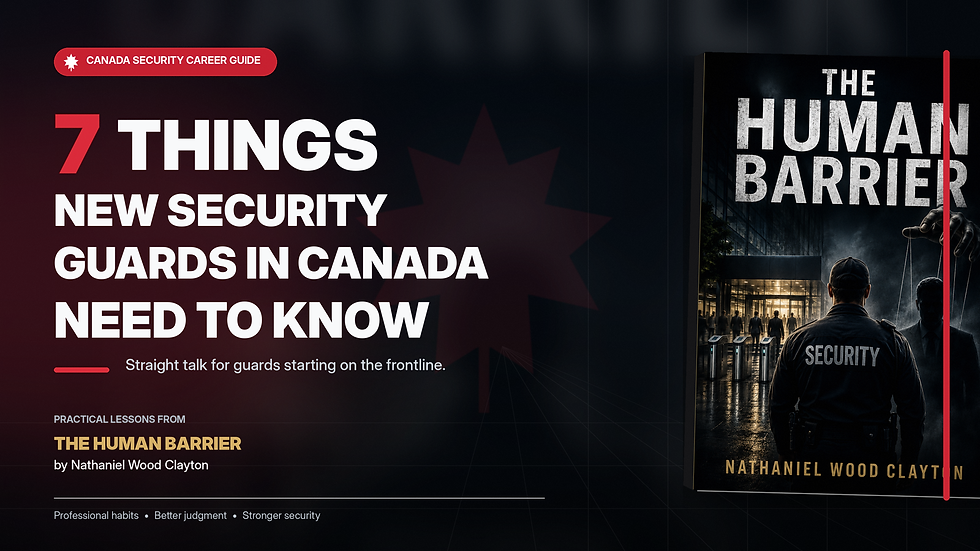
In The Human Barrier, Nathaniel Wood Clayton explores the full range of social engineering tactics used against frontline security professionals. From authority and urgency to impersonation, reconnaissance, tailgating, baiting, and manipulation, the book shows how attackers target people instead of technology.

Most security breaches do not begin with force.

They begin with trust.

If you want to sharpen your awareness, strengthen your judgment, and become a more effective security professional, The Human Barrier provides practical lessons drawn from the real challenges guards face every day.

Because in the end, the strongest security system is not a camera, a lock, or a fence.

It is the professional standing between the threat and the target.

Every question is a security decision.

This blog covered one threat: information elicitation. The quiet art of gathering small details that can become a larger security risk.

But this is only one piece of the puzzle.

In The Human Barrier, Nathaniel Wood Clayton explores the full range of social engineering tactics used against frontline security professionals. From authority and urgency to impersonation, reconnaissance, tailgating, baiting, and manipulation, the book shows how attackers target people instead of technology.

Most security breaches do not begin with force.

They begin with trust.

If you want to sharpen your awareness, strengthen your judgment, and become a more effective security professional, The Human Barrier provides practical lessons drawn from the real challenges guards face every day.

Because in the end, the strongest security system is not a camera, a lock, or a fence.

It is the professional standing between the threat and the target.

Comments


©2026 by Nathaniel Wood Clayton | CountMemeLord

 Final Jubilee

bottom of page